
How to Choose the Right Workshop Repair Manual for Your Vehicle: What Most Drivers Miss (Until It’s Too Late)

Choosing the wrong workshop repair manual for your vehicle can lead to wasted time, incorrect fixes, and even more damage than you started with. Whether you’re dealing with a fundamental oil change or diagnosing a complex electrical issue, the manual you choose can either guide you to success or send you down a costly path of guesswork.
The key is knowing how to identify a reliable, vehicle-specific manual that matches your repair needs, not just any manual off the shelf. Many drivers trust the first guide they find online, unaware that it may be outdated, incomplete, or tailored to a different model year.
In this article, we’ll break down exactly how to tell a trustworthy workshop repair manual from a generic one, what features to look for, and why your vehicle’s make and model matter more than you think. You’ll also discover tips that seasoned mechanics rely on but rarely talk about.
How to Choose the Right Workshop Repair Manual for Your Vehicle: Don’t Buy the Wrong One (Here’s What to Check First)
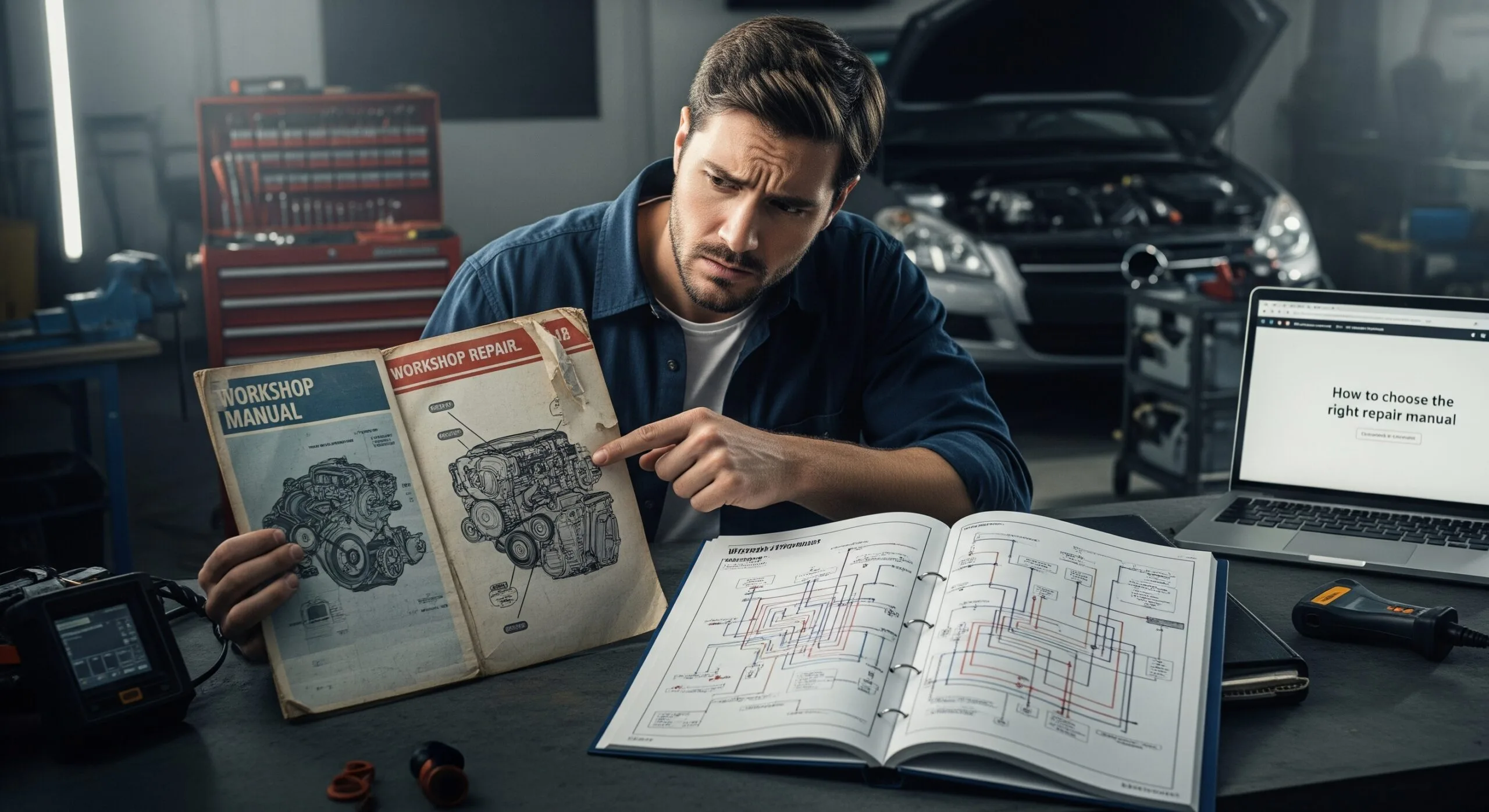
It’s easy to assume that all workshop repair manuals are the same, but they’re not. If you’ve ever ended up halfway into a repair only to realize the steps don’t apply to your vehicle, you’re not alone. In this section, we’ll break down how to choose the right manual the first time, avoid misleading information, and ensure you’re not working blind.
Start with Your Vehicle Details Even the Small Stuff Matters
Before starting, take a moment to ensure you know exactly which vehicle you’re working on. That sounds obvious, but honestly, this is where most people mess up.
- You’ll need the VIN. It tells you more than you think engine size, build location, even emissions package.
- Check the trim and sub-model (e.g., LX vs. EX, or SE vs. Sport). Manuals aren’t always clear on what’s included.
- Is your car stock or modified? Aftermarket parts are not covered in the manual, as it was not written with them in mind.
Without this information, you’ll probably end up with a repair manual that skips the part you need or worse, gives you the wrong torque spec.
Not All Workshop Manuals Are Created Equal Understand the Types
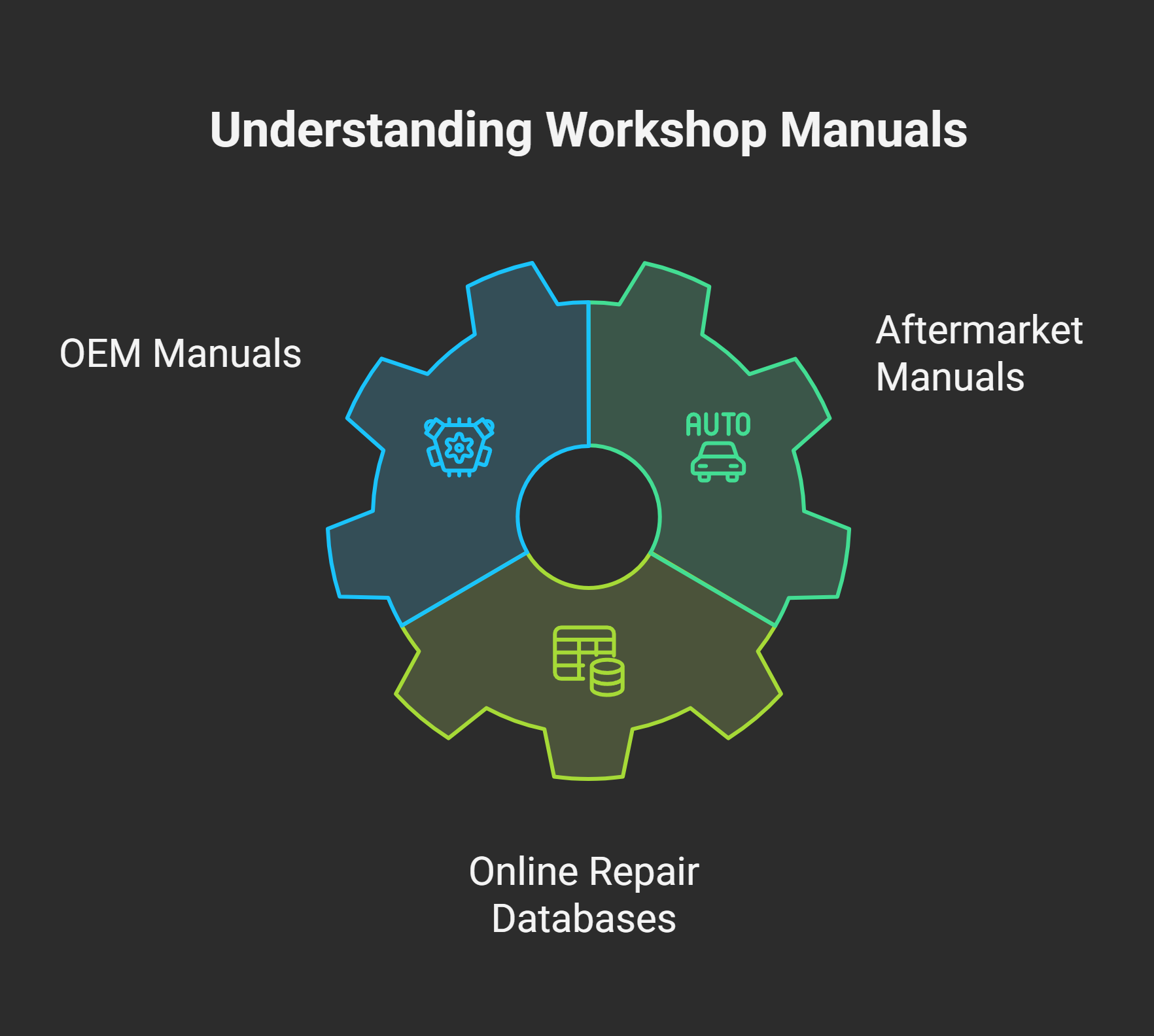
There are different kinds of workshop manuals, and if you’re not sure which one you’ve got, that’s already a problem. Some are meant for pros; others are DIY-friendly. Here’s a quick breakdown:
- OEM manuals: Made by the actual car manufacturer. Super detailed, super specific, but not always easy to read unless you’re used to technical stuff.
- Aftermarket manuals (such as Haynes or Chilton): These cover multiple models and are easier to understand, but sometimes oversimplify complex details.
- Online repair databases (e.g., Alldata, Mitchell1): Subscription-based, updated often, and packed with info but they can feel overwhelming at first.
If you’re doing anything beyond routine maintenance, choose something that’s either OEM or at least model-specific. A catch-all manual won’t cut it.
Accuracy Is Everything And Some Manuals Just Don’t Have It
Here’s the deal: a repair manual that’s outdated or missing info can steer you in the wrong direction. That’s not an exaggeration.
Here’s what to look for:
- The latest revision or publishing date, especially if your car is less than 10 years old.
- Diagrams that match what you’re seeing under the hood (not just something “close enough”).
- Torque specs, safety instructions, and troubleshooting guides. If any of those are missing? Skip it.
Don’t just assume a PDF floating around online is legit. Many of them are scanned from unknown sources and may omit crucial sections.
Your Vehicle’s Trim Level Can Change the Repair Process
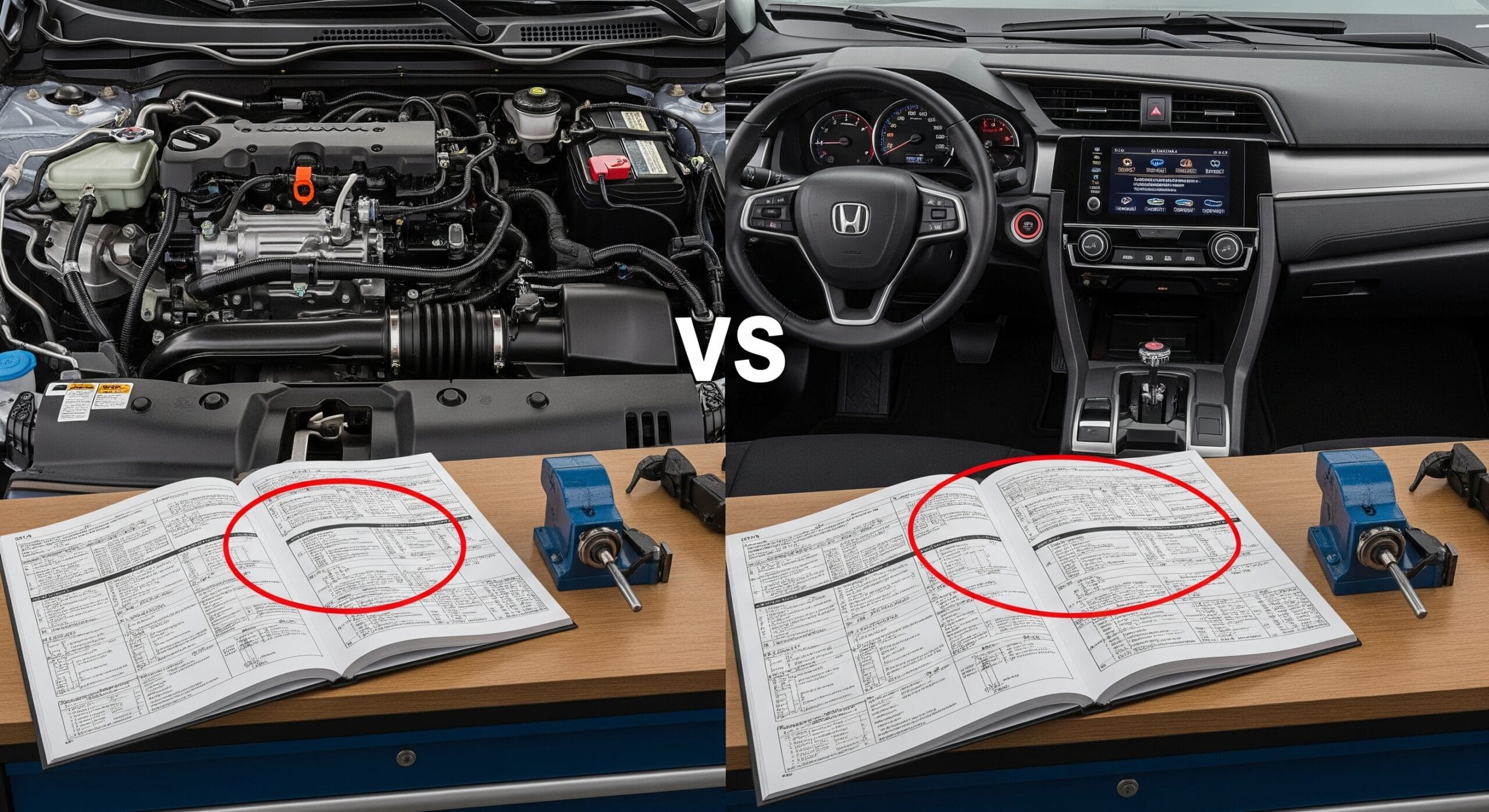
This surprises people: not all models are built the same. Even two cars from the same year can require different procedures if they’re different trims.
Examples:
- A 2017 Civic LX might have a different wiring harness than the EX.
- AWD vs FWD models have different drivetrains and suspension layouts.
- Some models include optional systems (like adaptive cruise or lane assist) that others don’t.
When selecting a workshop manual, ensure it covers your specific trim level, not just the general model of the vehicle. A vague reference to “all models 2015–2019” isn’t enough.
Print or Digital? There’s No Perfect Answer
You might think digital is always better, but that’s not necessarily the case. Printed manuals are easier to flip through when your hands are greasy. Still, there are pros and cons to each:
- Printed manuals: Durable, great in a garage setting. No need for Wi-Fi or a device. Some folks just prefer paper nothing wrong with that.
- Digital manuals: Searchable, faster to navigate. Often include real-time updates and videos. It can get expensive if it’s subscription-based.
There’s no wrong choice just pick the format that works best for your space and your preferred working style. For detailed electrical repairs, digital often wins for the zoomable diagrams alone.
Reviews Aren’t Everything But They Help

This one’s tricky. Not all reviews are legit, but when people consistently praise (or trash) a specific manual, it’s usually worth listening to.
Tips for reading between the lines:
- Look for reviews on forums specific to your vehicle. These folks don’t hold back.
- Avoid “perfect 5-star” ratings with no substance. A good review mentions clarity, accuracy, and usability.
- If multiple users report missing sections or poor translations, believe them.
Choosing a manual based on honest feedback not just flashy marketing can save you a lot of frustration.
Spot the Warning Signs Before You Buy
There are red flags you can catch early if you’re paying attention.
Avoid manuals that:
- Feel overly generic or copy-pasted across different models.
- Lack of diagrams or photos, especially for step-heavy procedures.
- Use outdated language like “carburetor” when your vehicle’s fuel-injected.
- Don’t include safety warnings or part numbers.
If it looks like a cheap scan or the cover seems off, it probably is. Trust your gut.
Free vs Paid Manuals You Get What You Pay For (Usually)
There are free guides out there. Sometimes they’re okay, especially for basic stuff like changing oil or checking fuses. But when things get more involved? Free won’t cut it.
Free resources might include:
- Forum posts or blogs
- YouTube tutorials
- Owner’s manuals (not the same as repair manuals, by the way)
Paid manuals offer:
- Proper diagnostic flowcharts
- Access to factory wiring diagrams
- Manufacturer-issued service bulletins (huge for common issues)
If you’re working on anything electrical or engine-related, choosing a verified, paid workshop manual is a more informed move. Consider it an investment, not a cost.
Conclusion
Conclusion: The workshop repair manual you choose plays a huge role in whether your vehicle gets fixed right or ends up in worse shape. Take the time to match it to your exact model, check its credibility, and decide if you’ll benefit more from print or digital. There’s no single correct answer but there is a wrong one: guessing. So don’t. Your repair success depends on it.
Frequently Asked Questions (FAQs)
If your vehicle falls between model years or you can’t find an exact match, look for a manual that covers a range including your year, but verify that any significant mechanical changes weren’t introduced. In some cases, forum communities or manufacturer service departments can confirm compatibility.
Not always. Even if the model name is identical, vehicles often differ by market due to variations in emissions standards, safety regulations, or regional parts requirements. Always check that the manual matches the specifications for your country or region.
They can be but it depends. Some translated repair manuals are poorly done, introducing errors in steps or terminology. If English isn’t the manual’s native language, double-check diagrams and try to find reviews before relying on it for major repairs.
Yes. EVs and hybrids often require specialized manuals that include high-voltage safety protocols and system-specific diagnostics. Don’t attempt repairs on these systems with a standard internal combustion vehicle manual.
Some manuals, particularly digital platforms like Alldata or factory service portals, include labor hour estimates and OEM part numbers. While not exact pricing tools, they help plan and compare quotes from local shops.
If the repair is complex like engine timing, transmission work, or anything electrical it’s often worth buying a quality manual just for that task. You’ll likely refer back to it in the future, and the cost is far less than a single shop labor charge.